sound & SILENCE
a unique approach to music
with ~ Gabriela Ross, Joshua Crouch, Staphany Olalde. music, dance/choreography There are sacred mountains all over the world and in our backyard. This piece explores the historical and archaeological plus personal experiences of some of these mountains. And some rituals imagined about them. Show dates are April 4, 5, & 6, 2024 7:30PM 12th Ave Arts Mainstage on Capitol Hill To reserve a ticket ($20) and for more information/updates mountainproject at soundand.com   The Turtling Dithers have become Mystic Weirdos The new website is mystic-weirdos.com there you will find our albums. Our label/distributor is Exquisite Noise and you will find our music on most streaming services. For lyrics please go to our site. What happened to the 'Dithers' you might ask? Well we dithered away to other parts of country making rehearsals more than difficult. However Maurice (guitarist) and Jay have attempted to bridge the gap (with difficulties abounding) and have formed this new/old group doing what we do. Playing music making songs and finding rewarding ways to confuse ourselves. Please give the site and sounds a look and listen. Feedback appreciated there's an email address on the website to get back to us. I be available for solo performances (musical) after the pandemic, please let me know if that will be of interest and we will try to arrange something for you and your guests. Thanks Jay ~~~~ To get on my mailing list for concerts
and other musical events please write to ~ ~ ~ ~ ~ Who am I? 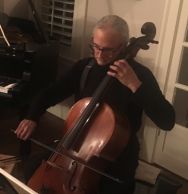
Leschi/Mt. Baker area. for more complete information click here. |
I have retired from providing music lessons to groups. In the Leschi/Mt. Baker (Seattle) neighborhood, Private individual lessons in
piano, cello, string bass, bass guitar, guitar (basic chords, fingerstyle, classical), theory
and composition.
Some Rules and a little Philosophy about practicing sound & SILENCE
or ctrl[cmd]+home
Former students or adults who wish to 'bone up' or renew their musical practise I can consider arranging time for them, if this is of interest please call 206 356 4626 and leave a message, I will get back to you as soon as I can
When teaching I provide ...
Instruction in
listening, playing, instrument building,and composing. Emphasis on
all aspects of the world of music and on the musics of the world.
Specializing beginning
adults.
Frequently Asked Questions
Reviews of my classes and lessons
What do I charge?
Who I am
Links to resources I can recommend
The Tea Table project in Colman Park
I have kept daily journals of my travels
in Turkey .
I attended a Music Festival in Fes, Morocco
May 2017, the music I wrote and a pdf of the journal I kept are here.
A unique approach to music lessons,
For further information call
or leave a message at 206-356-4626
Some Rules and a little Philosophy about practicing
Practice at a scheduled time, one agreed upon by the entire family,
and in the same place EVERYDAY
When you practice, do one of the
following for at least 15 minutes before changing to a different one;
Listen to one song over and over again
Play your
instrument- practice the music of your lesson-PLAY IT FOR FUN
TOO!!!
Make a new instrument
Write a piece of music for one
of your instruments
Read a story about a musician (singer,
performer, composer)
Go to a concert ( a musical, symphony,
chamber music, opera, choral, rock-n-roll) or watch and listen to
one on the TV/Video
*It does not come naturally or easily- though it can be fun/involving/ compelling, often that is not the case- practicing is work.
*To plant the seeds of the idea that practicing is something that we do, and that it can become natural, it is very important that Mental, Emotional, and Physical space be created for each student so that they can practice. To this end a family decision on the time and place that practicing occurs is very important. This tells the student that everyone understands that their musical activity is important (AND DIFFICULT!) and that they will be supported while doing it.
*Keeping a schedule - the time and place the same each day makes
this easier.
However studies have shown that it is daily music time (whenever that may be) is more important than a rigid same time.
*No less important is keeping the distractions to a minimum.
*Everyone must agree that the practicing comes first and that bothering the student is to be avoided if at all possible.
*This is hardest and most important when there are siblings.
or ctrl[cmd]+home
sound
&
SILENCE
For further information call
Jay Hamilton
or leave a message 206-356-4626
or ctrl[cmd]+home
Fees/Tuition
All classes are
one hour in length. Tuition is due on the first of the month.
lessons are $40 or $160.00 per
month
| sound
&
SILENCE
For further information call Jay Hamilton 206-356-4626 |
or ctrl[cmd]+home
or ctrl[cmd]+home
| These
are links to sites and software that I use and are pertinent to taking music lessons ResourcesParentmapa parent's resource page for the Northwest Notation softwareNoteworthy Composer is probably the best deal for notation that's around.It works, has great support, is inexpensive and many of my students have found that it was easy enough to use and compose with. All around, without spending 4 times as much, you can't do better. [pc only for the moment] More of my music is accessible from a related site and can be found here. Tabledit Anything that Noteworthy doesn't do Tabledit can do - create tab and read a number of unusual formats often used in collecting folk music. The software works [it is a little trickier to use than Noteworthy composer] and adds useful tools to notation capabilities. It is inexpensive and unlike Noteworthy it's development and upgrading is timely. Lilypond If you are looking for a more professional looking score then Lilypond may be for you. It is not for beginners but rather for people who are copying scores or creating professional looking scores of original compositions. The output is beautiful and the learning curve is steep in the beginning and continuous as the software is always under developement. However it is free for downloading and if you know something about notation it is easily as good as any of the expensive notation softwares I have tried. If you have interest in more of my music in the following categories please write to me and I will send a link for access. |
or ctrl[cmd]+home